Contact
Request A Catalog
logo-image
  • Expertise
    Expertise

    Nearly 50 years of industry leadership. We bring our legacy of expertise in architectural, landscape, and industrial design to every project.

    • Design Process
    • Reading Nature
    • Feature Trees
    • Biophilic Integrations
    • Applications
    • Manufacturing
    • Sustainability
    • Technology
    • ThermaLeaf®
    • PermaLeaf®
  • Products
    Products

    We celebrate nature in the design of our products. We create artificial plants, trees, topiaries, hedges and green walls that reconnect people to nature.

    • Artificial Trees
    • Artificial Plants
    • Artificial Moss
    • Green Walls & Topiaries
    • Biophilic Integrations
    • Moss
    • Green Walls
    • Hedges & Topiaries
    • Tropico±23
  • Resources
    Resources

    View past projects from around the world. See indoor and outdoor artificial greenery implemented on a grand scale, and find valuable downloadable assets.

    • About
    • Contact
    • CSI Creative

    • Case Studies
    • Projects
    • Whitepapers
search-image
My List
my-list-images
mobile-logoimage
hamburger-icon close-icon
  • Expertise

    Nearly 50 years of industry leadership. We bring our legacy of expertise in architectural, landscape, and industrial design to every project.

  • Products

    We celebrate nature in the design of our products. We create artificial plants, trees, topiaries, hedges and green walls that reconnect people to nature.

  • Resources

    View past projects from around the world. See indoor and outdoor artificial greenery implemented on a grand scale, and find valuable downloadable assets.

  • Expertise

    Nearly 50 years of industry leadership. We bring our legacy of expertise in architectural, landscape, and industrial design to every project.

  • Explore
  • Advantages
  • Materials
  • Products

    We celebrate nature in the design of our products. We create artificial plants, trees, topiaries, hedges and green walls that reconnect people to nature.

  • Artificial Greenery
  • Solutions
  • Collections
  • Resources

    View past projects from around the world. See indoor and outdoor artificial greenery implemented on a grand scale, and find valuable downloadable assets.

  • Company
  • Inspiration
  • Documents
  • Explore

    Learn about our design process, find out how to engage, and get a foundation for biophilic philosophies.

  • Design Process
  • Reading Nature
  • Feature Trees
  • Biophilic Integrations
  • Applications
  • Advantages

    Fire-safe materials. High-end visual feedback. Responsible material sourcing. That's why you choose Plantscape Commercial Silk.

  • Manufacturing
  • Technology
  • Sustainability
  • Materials

    ThermaLeaf® fire-resistant artificial foliage and PermaLeaf® UV-resistant outdoor foliage are the heart of safe and long-lasting installations.

  • ThermaLeaf®
  • PermaLeaf®
  • Artificial Greenery

    Outdoor, indoor, fire code compliant, ultra-tough. The widest selection of commercial-grade artificial greenery is a click away.

  • Artificial Trees
  • Artifical Plants
  • Artificial Moss
  • Green Walls & Topiaries
  • Biophilic Integrations
  • Solutions

    Find out what's possible. Gain new perspectives and inspiration, and discover new ways to bring joy to your spaces.

  • Moss
  • Green Walls
  • Hedges & Topiaries
  • Collections

    Curated, high-polish products with a cohesive visual identity. Unify an entire building or campus with a single defined collection of biophilic features.

  • Tropico±23
  • Company

    Get in contact and get answers. Read about our long history of growth, and discover our brand family.

  • About
  • Contact
  • CSI Creative
  • Inspiration

    Explore some of our proudest projects, and get a glimpse of what our design, build, and installation process looks like.

  • Case Studies
  • Projects
  • Documents

    Download digital assets, learn to design with nature more effectively, and get an insider perspective on the industry.

  • White Papers
My Listmy-list
Contact
Request A Catalog

Blog

Resources >
Blog

How to use Preserved Moss for Branding and Signage

  • IN Blog

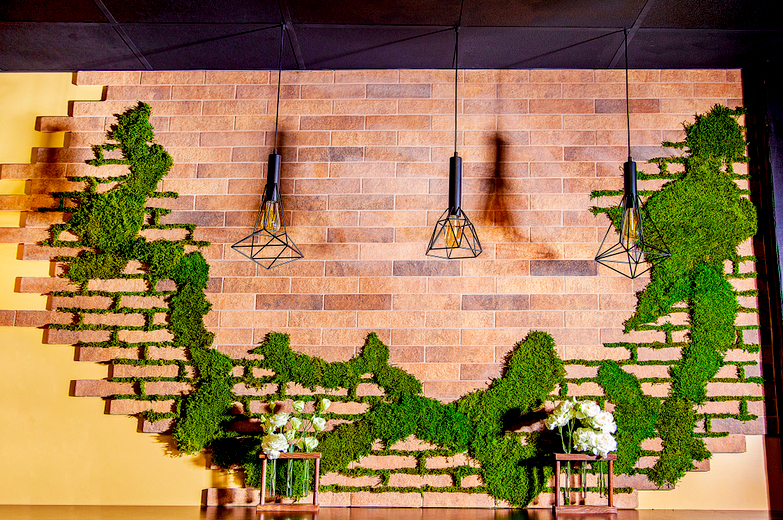
There is something extremely charming about Moss when used within interior designs. With its velvety texture, pleasing green hue, and calming vibe, Moss can inject life and comfort into any setting. With the widespread adoption of Preserved Moss, it is very easy to create artsy Moss elements and turn any lifeless space into a thriving and beautiful experience. One popular way of using Preserved Moss is for branding and signage – a great way to make your corporate identity more prominent and fun. The best part about it is that such displays stand out amongst the crowd and do not […]

Read More

Create a Lush Rooftop Terrace with These 7 Design Tricks

  • IN Blog

Urban spaces have become concrete and glass jungles. Whether you are a nature lover or not, every city dweller seeks a soothing, lush garden where one can unwind after a long, tiring day. However, this remains a distant wish since most of the cities are packed with no room whatsoever for a serene garden. This is where building’s terrace comes into picture. A perfect place to create a refreshing, private retreat, rooftop terrace gardens not only bring beauty and serenity but attracts rich wildlife and help in maintaining cooler temperature. With a few design tricks, you can create your own […]

Read More

Biophilic Theory and Its Impacts on Learning Spaces and Student Success

  • IN Blog

People have always turned to nature to bring tranquility to their spaces, and benefit from it as a means for stress reduction. We have always known that our health and well-being are impacted by our environment and the presence of nature has contributed towards opportunities for mental restoration. Biophilic learning spaces that incorporate nature aid in mental restoration, during which the high–level cognitive functions of students can recharge. This ensures a greater ability to perform focused tasks as compared to students with fatigued cognitive resources.  Biophilic Designs and Classrooms or Biophilic Learning Spaces A study named ‘The Impact of Biophilic […]

Read More

Applying the Benefits of Biophilic Theory to Hospital Design

  • IN Blog

Nature has always played a big role in the healing process. Japanese Zen gardens, monastic or cloister gardens of the past created a soothing environment and provided great respite for patients. Nature-health relationship has been studied to a great extent and biophilic design patterns have shown to provide opportunities for mental restoration and overall well-being. Empirical studies have shown that experiences with the natural environment provide greater emotional restoration, with lower instances of anxiety, anger, fatigue, tension, and confusion than urban environments with a limited presence of nature.  Cultural Change in Hospital Designs Research carried out by Ulrich and others […]

Read More

Vertical Gardens Show Promise as Sound Barriers for Buildings

  • IN Blog

Few things look as charming as sprawling walls of greenery on buildings. Vertical gardens don’t just perform on an aesthetic level – they also help in improving the quality of life in urban environments. Apart from making urban areas more beautiful, vertical gardens help in energy savings, stormwater control, biodiversity support, and more. But a lesser known aspect of these gardens is the role they play in noise attenuation. The design, plants grown, and more aspects of vertical gardens all play a crucial role in affecting sound insulation properties of a building.  Why vertical gardens for sound barriers for buildings? […]

Read More

Could Biophilic Lighting be the Answer to Work-From-Home Health?

  • IN Blog

The pandemic forced everyone to work from home, and after almost two years it has taken a toll on the mental and physical health of professionals across the world. Now, as some are returning to their workspaces, there is still a large percentage of the workforce for whom working from home might become a permanent thing. Locked indoors with limited access to nature is one of the biggest complaints of work-from-home professionals. This is causing mental health issues for a large number of professionals as they struggle with anxiety or depression. ‘Biophilic lighting’ has evolved as an impactful way of […]

Read More


Image

The Modern Rise of Urban Rooftop Gardens

  • Blog

Rising population, limited space, and subsequent expansion of urban systems have subjected cities to an unprecedented stress test. Cities are getting denser, bigger, and busier by the day, forcing everyone to rethink urban planning and resilience. Rapid urbanization is making planners and designers compete for limited resources needed to pursue long-term goals. One of these contested spaces being fought over is rooftops. Rooftops remain the last urban frontier, and they are being put to use for a variety of global approaches including farming, nature-based solutions, improved air quality, rainwater capture, and more.  Evolution of Urban Rooftop Gardens Modern urban rooftop […]

Read More
Image

Representing Sensory Experience in Urban Design

  • Blog

Urban planners and designers focus on the visual and aural aspects of urban spaces. While this helps to create a beautiful experience, it should be stressed that that meaningful spatial quality, or atmosphere, is generated through multi-sensory spatial experiences. We need to take a more holistic approach to the role of senses to create urban spaces that are an experience for all the senses.  Why does sensory experience matter in urban design? The atmosphere of any space is influenced by a multitude of sensory factors. It is not only visual but haptic and audible as well. These factors, in turn, […]

Read More
Image

Integrating Architecture with Nature and Well-Being

  • Blog

People spend an average of 20 hours each day indoors. After spending hours in our workplace, we return home, meaning what little time we spend outdoors is typically spent in transition. This is one of the major reasons why we feel disconnected with nature. Poorly conceived environments lacking a presence of nature make us feel isolated and wear down our mental health. Humans crave a connection to the natural world and have an inclination towards it, which is why Architecture and urban design need to integrate nature to bridge this disconnect and develop closer bonds. Benefits of Integrating Architecture with […]

Read More
Image

7 Principles of Healthy Buildings

  • Blog

The built environment affects human health and behavior in a direct and appreciable way. As we spend more than 90 percent of our time indoors, these places have a significant impact on our mental and physical well-being. The push to develop healthy buildings has always been around, but it has recently gathered momentum due to the pandemic with increasing numbers of projects opting for environmentally responsible, resource-efficient, safe, and healthy building plans. Below are a few principles of healthy building environments that will not just increase the performance of the building but will make people comfortable and active by designing […]

Read More
Image

Why Bring Biophilia into Eating Areas and Restaurants

  • Blog

In eating areas, there are two primary components to the experience that we are familiar with –  one is the food and the second is the interior design. In terms of interior design of an eating area or restaurant, it’s important to consider what the guests think and experience. Some eating areas are built only for function, while others invite people to set up their laptop and to stay awhile. The ambience created can dictate the length of time people stay in the eating space and how often they come. Eating spaces that provide an extra offering beyond the food […]

Read More
Image

How Biophilia Is Applied to Biophilia to Walls, Ceilings, and Floors

  • Blog

A building’s geometry is a result of applying a particular design language chosen by the architect. A design language includes the basic elements: floors, walls, ceilings, volumes, and their subdivision, windows, materials, ornamentation, and the rules for combining them. When the design language of a building is biophilia, opportunities include more than just plants on these surfaces.  Stephen Kellert in his thought-leadership has provided design professionals with a roadmap to incorporate a biophilic design language within buildings. He stresses that good biophilic design is more than bringing potted plants and artwork into the space. Rather, effective biophilic design is thoughtfully […]

Read More
Image

Designing and Building following WELL Standards

  • Blog

Buildings are constructed for humans. They are designed for human activity, and since we spend more than 90 percent of our time inside the built environment, it is crucial that we create something that positively impacts our emotional, physical, and mental well-being. This is exactly what WELL Building Standards are all about.  What are WELL Standards? A model to improve human-centered design and construction, WELL is a performance-based system formulated by the International Well Building Institute for certifying features of the built environment that impacts health and wellness while integrating existing green building standards like LEED and Living Building Challenge. […]

Read More
Image

Geometric Style in Design of Urban Landscapes

  • Blog

Through the ages, geometry has had a key influence on the design of urban landscapes – and it’s easy to see why. They are pleasing to the eye and represent a common value of beauty and order that reflects society’s condition of well-being. From the ancient landscapes of Persia and Egypt to Renaissance Europe and even contemporary landscapes, mathematical shapes and patterns have inspired design for centuries. Considered formal, or sometimes classical, geometric landscape designs can be found across the globe today.  Geometric landscapes aren’t just about visual aesthetics, but they greatly influence the way people view and experience them. […]

Read More
Image

Biophilia into Office Spaces

  • Blog

People spend an overwhelming amount of their time indoors. Numerous studies have concluded that we spend about 90 percent of our time indoors where the staff that do get to step out only immerse themselves for 15-30 minutes outdoors. With many Americans working on average 40 hours per week indoors, this adds up to a lot of time away from nature.  ‘Biophilia’, a term coined by research biologist Edward O. Wilson, describes that human beings have an inherent need to connect with the natural environment. A later response to E. O. Wilson’s work led to biophilic design as a strategy […]

Read More
Image

Why Incorporate Biophilia into Corridors and Walkways

  • Blog

If you walk from Concourse A to Concourse B at ATL Atlanta Airport, you will experience elements of Biophilia during this transit. You will hear the sounds of wind and birds coming from the hanging plants that are accented with soft lighting. This biophilic experience creates a calming mood when transitioning between concourses in a traditionally busy and sometimes stressful airport. Airports invest in reducing stress for people, and that includes people transitioning from one space to another. When considering the effectiveness that biophilic design applications have at reducing stress people might experience when in transit at airports, offices can […]

Read More
Image

Why Incorporate Biophilia into Collaboration Areas

  • Blog

Collaboration areas are where ideas come to fruition. These spaces are meant to inspire creativity and social interaction. Just as it’s normal for humans to socialize, it’s also normal for humans to connect with nature. When a social connection occurs in a setting such as a biophilic collaboration area, people reach a more comfortable state of well-being while also inspiring productive interaction. Intersecting benefits of social interaction with biophilic design provide several positive impacts that can be productive for people working in collaboration areas. Positive interaction with others releases oxytocin in the brain, which improves mood. Human connection to nature […]

Read More
Image

Budgeting Biophilia in Offices

  • Blog

Biophilic Design Makes Economic Sense A common question asked by clients is what it will cost to incorporate biophilia in their office. Biophilic design can be considered a similar concept to that of incorporating solar panels onto a roof to harness energy, upgrading an HVAC system to improve performance and efficiency, as well as switching to low voltage incandescent light fixtures to save on energy bills. The up-front capital cost provides for the subsequent economic savings and benefits for the office as well as for the personnel.  In terms of biophilic design, the upfront capital cost allows for subsequent enhanced […]

Read More
Image

Influence with Design – A Guide to Color and Emotions

  • Blog

The pioneer of abstract art, Wassily Kandinsky, once said, “Color is a power which directly influences the soul.” Colors influence our emotions and are known to dramatically affect human moods and feelings. The use of colors in commercial spaces can be used to signal action and productivity in the workplace. Colors can represent all sorts of different things. For example, the color red usually means angry or bad, whereas yellow means joyful and content. Colors can even go deeper too with their meanings. There are colors for depression, relieving stress, and even reducing high blood pressure. The color choices, whether […]

Read More
Image

Biophilic vs. Biomorphic Design

  • Blog

Nature has always been a big influence on humans. There are countless examples in history of nature being involved in design in people’s homes and spaces. Ancient Greek temples, the Egyptian Sphinx, and the Rococo designs found in the Salon de Monsieur le Prince are all proof of the fact that nature has always been a part of human spatial design. This indicates that implementing nature in a built environment is not a new trend. Over time, these ideas have evolved into the modern notions of biophilic and biomorphic design. It is easy to mix up these terms as they […]

Read More
Image

Biophilia in Lobbies

  • Blog

Lobbies are the first place where people enter a building.  They give a strong first impression to the employees and guests entering the space. Many opportunities exist in the lobby to allow people to have an experience of human to nature interconnectivity that will provide them with an idea of what is to come within the office space.  When people enter a lobby, they can be immersed in an experience and sense that they are entering a calming environment. When people see plants, earth tone colors, natural light (if available), and materials representative of nature, the human will subconsciously respond […]

Read More
Image

Anticipated Changes in the Office Environment and How Biophilia Plays a Role

  • Blog

What Does the Post-Pandemic Workplace Look Like? A recent JLL survey of leaders in business found that the future office place is changing. It is predicted that the majority of businesses will continue utilizing a hybrid work environment in the post-pandemic era. The survey found that 46% of businesses intend to reduce their real estate footprint by up to 30% to allow for flexible/hybrid workspaces. While changes are being made to how and where people work, the office is not going anywhere. What’s changing is how people work and the environment in which they collaborate.  Many businesses see these changes […]

Read More
Image

Interior Architecture and Design Trends 2021

  • Blog

The last 18 months have been especially chaotic for offices, retail businesses, and hospitality ventures that saw a major disruption in every part of their operations. Commercial spaces are constantly changing and evolving, but 2020 has forced a radical rethink in how we design public environments. As people get vaccinated, things are regaining a sense of stability, but the way we work, shop, and dine has undergone a massive shift. This has sent architects and designers back to the drawing board to create spaces where customers and employees can feel safe. Below are a few commercial interior architectures and design […]

Read More
Image

Biophilia and the Visual Connection

  • Blog

Urban spaces are increasingly becoming dense built environments with little space for nature. The missing factor to creating a healthy environment in these urban spaces is biophilia. Regular exposure to nature has many advantages that are stripped away in the modern built environment. Biophilic design respects mind-body systems as indicators of health and well-being. Visual connection with nature is one of the most important elements of biophilic design and can enhance the experience of commercial space by reducing stress, improving cognitive performance, and positively impacting attitude and overall happiness.  Visual connection with nature is defined as having visual access to […]

Read More
Image

What is the Future of Office Spaces?

  • Blog

The coronavirus pandemic has reshaped the world, how we design public spaces, and how we use them. As vaccines continue to be distributed and the world becomes more and more open, it is only a matter of time before we return to how life used to be in the office. However, the office environment may be dramatically changed for many returning workers, and navigating them will be different than the way we remember. We will have to redefine the old office culture of crowded meeting rooms, lounge areas, shared cubicles, and long lines at the cafeteria. The office is meant […]

Read More
Image

Biophilic Design Principles, Elements, and Concepts

  • Blog

Humans have developed adaptive responses to the natural world. The human body, mind, and senses evolved in a bio-centric world and humans have an inherent inclination to affiliate with nature. This is what biophilia is all about. Biophilic design creates an atmosphere that connects humans to nature – the ultimate goal of which is to create a modern built environment that is healthy, inspirational, and restorative.  One of the most important principles of biophilic design is ensuring repeated and sustained engagement with nature. Biophilic installations should create a cohesive, interconnected environment throughout the entire space, much like real nature. Isolated […]

Read More
Previous 1 2 3 4 5 … 9 10 Next

Primary Sidebar

Biophilia in the
New Office Space

Learn about how office interior designs are adapting in response to the return of in-person working.

GET WHITEPAPER

Explore
  • Our Company
  • Design Process
  • Reading Nature
  • Feature Trees
  • Biophilic Integrations
Advantages
  • Manufacturing
  • Sustainability
  • Technology
  • Applications
Artificial Greenery
  • Artificial Trees
  • Artificial Plants
  • Artificial Moss
  • Green Walls & Topiaries
  • Biophilic Integrations
Education
  • Whitepapers
  • Solutions
  • Blogs
Connect
  • Contact
  • Request A Catalog
  • Headquarters & Showroom
  • 9901 West 74th St.
  • Minneapolis, MN 55344. USA
  • Toll Free: 800-241-2718
  • Main: 952-934-7666
  • Fax: 952-934-3807
instagram-image
twitter-image
facebook-image
linkedln-image
  • Headquarters & Showroom
  • 9901 West 74th St.
  • Minneapolis, MN 55344. USA
  • Toll Free: 800-241-2718
  • Main: 952-934-7666
  • Fax: 952-934-3807
© Plantscape, Inc. All Rights Reserved. Terms | Privacy